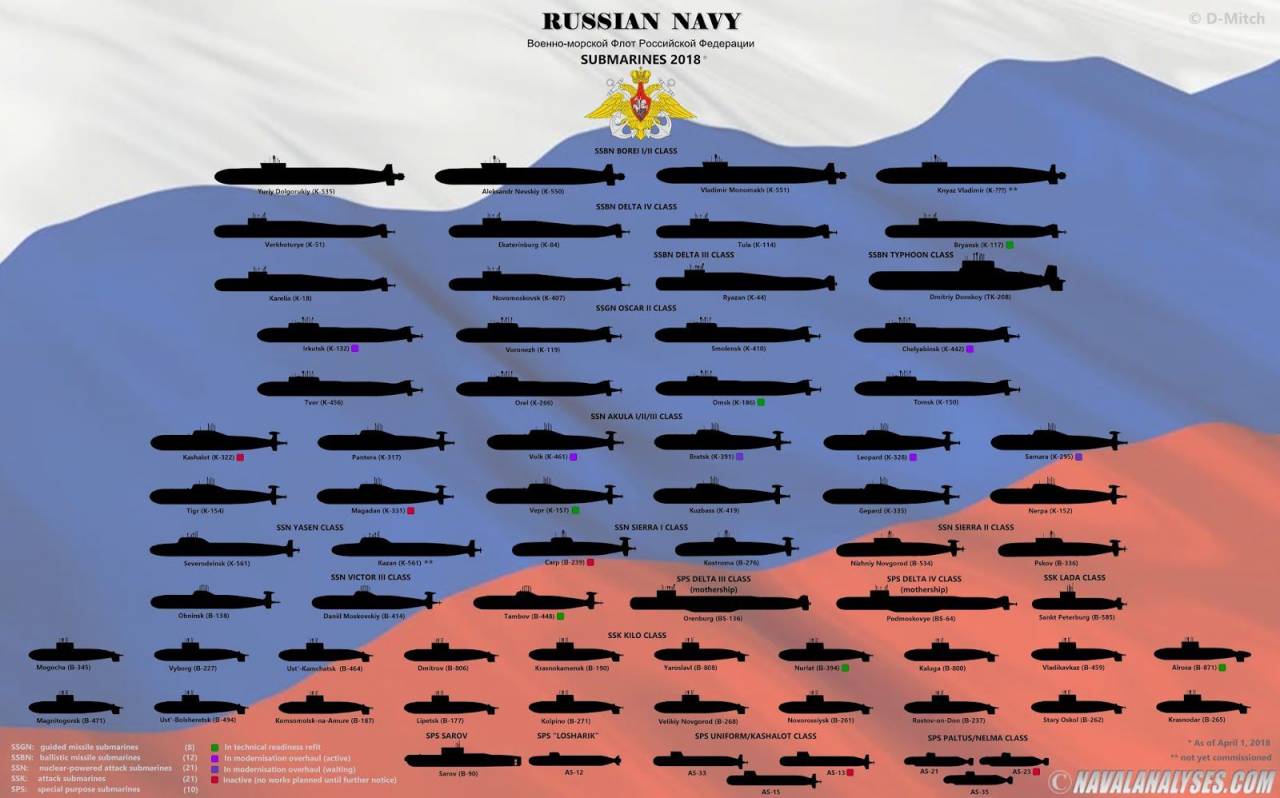
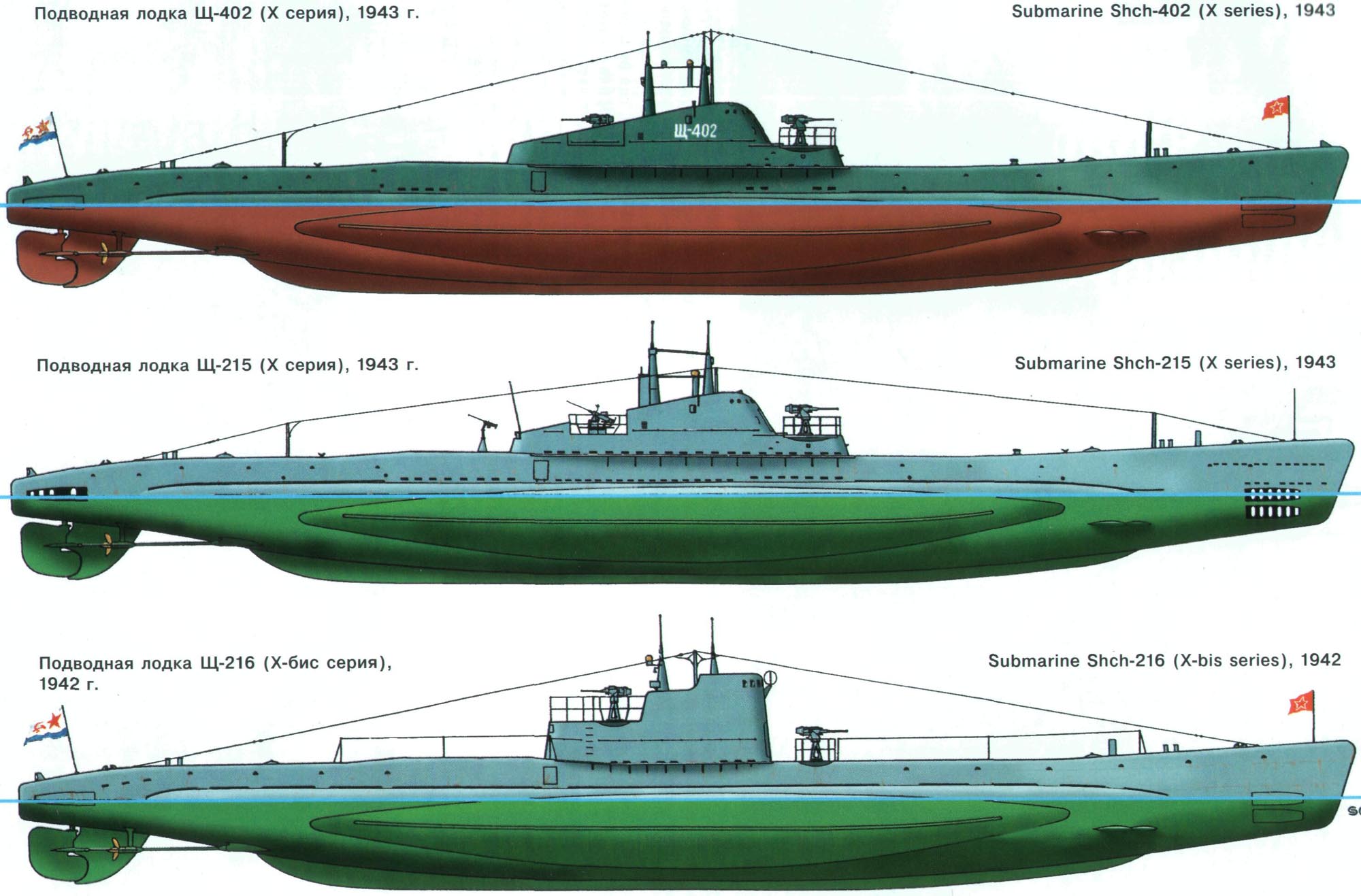
Submarines of the Soviet Navy were developed by numbered "projects", which were sometimes but not always given names. During the Cold War, NATO nations referred to these classes by NATO reporting names, based on intelligence data, which did not always correspond with the projects. See:
- List of NATO reporting names for ballistic missile submarines
- List of NATO reporting names for guided missile submarines
- List of NATO reporting names for hunter-killer and experimental submarines
The NATO reporting names were based on the British (and later American) habit of naming submarines with a letter of the alphabet indicating the class, followed by a serial number of that class. The names are the radiotelephonic alphabet call sign of a letter of the alphabet. For security purposes, the "pennant numbers" of Soviet submarines were not sequential, any more than those of Soviet surface vessels were.
Most Russian (and Soviet) submarines had no "personal" name, but were only known by a number, prefixed by letters identifying the boat's type at a higher level than her class. Those letters included:
- К (K): крейсерская (kreyserskaya, "cruiser")
- ТК (TK): тяжёлая крейсерская (tyazholaya kreyserskaya, "heavy cruiser")
- Б (B): большая (bolshaya, "large")
- С (S): средняя (srednyaya, "medium")
- М (M): малая (malaya, "small")
Any of those prefixes could have С (S) added to the end, standing for специальная (spetsialnaya) and meaning "designed for special missions":
- New weapon, engines and armament testing
- Submarines for long-range radio communications
- Target submarines for anti-submarine training
- Rescue service submarines
- Covert operations
Diesel-electric
Russo-Japanese War
- Delfin
- Kasatka-class submarine
- Som-class submarine
- Forel single unit/one off unit (class of its own)
- Osetr-class submarine
World War I era
- Pochtovy
- Minoga
- Akula
- Karp-class submarine
- Kaiman-class submarine
- Morzh-class submarine
- Narval-class submarine
- Krab
- Amerikansky Golland (Holland 602GF/602L type)
- Bars-class submarine
World War II era
Post-World War II era
Attack submarines
Guided missile submarines
Ballistic missile submarines
Auxiliary submarines
Nuclear-powered
Attack submarines
First generation
Second generation
Third generation
Fourth generation
Guided missile submarines
First generation
Second generation
Third generation
Fourth generation
Ballistic missile submarines
First generation
Second generation
Third generation
Fourth generation
Auxiliary submarines
See also
- List of Russian naval engineers
Footnotes
- Showell, Jak M. U-Boat Century, German Submarine Warfare 1906-2006. Chatham Publishing, Great Britain (2006). ISBN 1861-7624-10.
External links
- Bellona